Monday, April 14, 2014

Mandatory VS. Optional Professional Development

In all career fields, it is important that individuals do not remain stagnant in their professional development.  This poses the question, “Should engineers be required to continue their education and development in the professional career field of Civil Engineering?”  There are a few stances and viewpoints on this issue.  However, the two which I will address will be, it should be mandatory, and it should be an option for engineers to pursue.  In either case, I believe that it is important for employees in all career fields to continue their education whether made mandatory or optional by the employment agency or firm.  I believe employees should need to take professional development courses that allow them to stay up-to-date in a couple areas.  Those areas include the ever-expanding technological career field and materials used in various engineering applications.  I do believe that the expense of this education should be partially, if not fully absorbed by the employer.  I believe this because the employers gain a huge asset in their employees when they become more knowledgeable in their profession.


There are a few reasons why some people believe it should be completely optional for engineers to continue their education.  The biggest conflict or determent to not continue education could be the price tag.  As college students, we are all fully aware that education is not inexpensive by any means.  Although you receive the education you pay for, it puts employees in a potential financial bind if they need to pay for the additional education out of their own pocket.  Another reason employees may not want to participate in professional development opportunities is for the additional time it would take.  If the employer mandates professional development and still expects the same work commitment, this puts undo stress on the employee.  It is unrealistic for an individual to dedicate 40 hours a week to their job and then spend another 20 hours on continuing their education.   This additional time commitment also takes away from the individuals personal lives which could mean losing valuable family time.  Although these reasons pose a good argument against mandatory professional development, there are several reasons that support this ever-growing opportunity.


General Robert E. Lee once said, “The education of a man is never completed until he dies.”  I believe this is perhaps the greatest expression of education.  It is imperative that a person take advantage of any opportunity to develop themselves professionally.  One of the biggest reasons that a person should continue their education is to stay competitive in their career field.  When a person takes advantage of opportunities outside the workplace, they receive countless benefits.  These benefits can range from the potential promotion within their career field to helping advance technology in that same field.  A large area of professional development is the valuable leadership tools that an individual gains.  These tools can then in turn be applied and used in the field.  Employee and conflict management are two areas that professional development addresses.  Being able to work efficiently and effectively within a team is of great value to civil engineers.  Professional development provides employees with this exact area of growth.


There are several types of professional development in which an individual can participate.  These opportunities include seminars, advanced studies, and even going back to school to earn a Master’s Degree in their career field.   Although many people might not think it is appropriate to mandate professional development, I feel it will only benefit the employee in the long run.  When a person continues their education they not only grow as an individual, but they improve the quality of their workplace environment. 

Sources:

Wednesday, April 9, 2014

Songjiang Waterfall Hotel

There are many marvels of civil engineering and architecture both in the ancient world as well as the modern world.  These structures range from the Parthenon in ancient Greece to the Burj Khalifa, the tallest structure in the world, in Dubai.  Both of these structures have one thing in common.  A creative and intuitive mind envisioned their construction.  The Burj Khalifa may be the tallest structure in the world, but the Songjiang Hotel is amazing in its own right.  The following discusses the details of the hotel as well as the values civil engineers hold when designing a project and seeing it through to fruition.

songjiang-hotel-4
Aerial view of the quarry in Shanghai, China.
The Songjiang Hotel was to undergo construction in 2009, however due to various factors, groundbreaking for the hotel began in early March of this year.  What makes this hotel different from others you might ask?  To begin with, the hotel is being built in a 100 meter deep quarry in Shanghai, China.  The existing water in the quarry will be added upon to make an artificial lake.  This means that two of the floors in the hotel and an aquarium will be completely submerged beneath the lake.  Additionally, this five-star hotel will have 19 stories, containing upwards of 380 guest rooms.  As if this wasn't enough, a man-made waterfall will be constructed to flow over the front of the hotel.  If you find yourself as the thrill-seeking type, have no fear!  The Songjiang Hotel will provide its guests with the opportunity to bungee jump of the quarry ridge coming within feet of the artificial lake below.  This hotel will provide its guests with unique opportunities not found in other hotels.


songjiang-hotel-1
Artist's rendering of the Songjiang Waterfall Hotel.
One area of focus very important to civil engineering is the environmental factor.  Civil engineers take careful consideration of their projects’ effects on the surrounding terrain.  The engineers of the Songjiang Hotel have carefully considered their constructions impact on the environment.  By using an already existing terrain, the excavating “footprint” left on the environment will be significantly smaller than starting from scratch.  The hotel will contain a naturally lit atrium and green roof.  This green roof will use geothermal heat as electricity and a heat source.  The environmental considerations don’t stop here, however.  The surrounding area on the ledge of the basin will be engulfed with a variety of vegetation.  All of these environmental factors will help the Great Britain civil engineers working on the project, maintain a positive image in the public’s eyes.


songjiang-hotel-0
Artist's rendering of the hotel at night.
In addition to civil engineers’ concern for the environment during projects, civil engineers possess other values.  These include meeting deadlines on time and meeting them with precision.  This precision allows civil engineers to stay a step above the rest as professionals in their technical career fields.  The engineers behind the Songjiang Hotel project are undoubtedly experts in their career fields.  It is important to realize that one other important area of value to engineers is collaboration.  Referring back to the example of the Parthenon and the Burj Khalifa, I guarantee these were not one man’s or woman’s effort.  Behind every skyscraper, Girder Bridge, and dam, there exists a team of skilled engineers and other professionals.  These people work together to complete a task, no matter how small or large-scale it might be.  Simply put, this project is a team effort, and when completed, will be the next engineering marvel of the world!

Source:

Monday, April 7, 2014

CST Berger 32x SAL Automatic Level

An automatic level is one of the most important instruments used by both surveyors and civil engineers in landscape surveying.  An automatic level is used to determine the elevation of different plots of land from a given benchmark or “known elevation.”  The user of the automatic leveling system looks through the telescope to the rod across the landscape.  Here they then take the reading based on the marking on the rod held by their partner.  Since its invention, the automatic level has undergone several name changes, however remains an essential instrument to surveyors, civil engineers, and even military service branches across the globe.

Highway crews measure a distance and elevation during road construction.

The CST Berger Automatic Level provides its users with increased zoom/magnification to its sister level, the 28X.  As one might be able to tell, the 32 model provides its users with 32 times optical zoom, which is an improvement to the older 28 times magnification model.  This increased magnification is beneficial for several applications, but the most important is perhaps for long distances.  Road construction and foundations on large buildings are two scopes of use that benefit from the increased magnification.  This increased magnification increases the working range from 350 feet on the older 28x model to 400 feet on the 32x model.


CST Berger 32x SAL Automatic Level
with plumb-bob, lens cover, and manual.
This 50-foot increase in working range comes at a price, however.  For greater than $1/foot increase in range, the 32x model can be yours.  If a surveyor can tolerate setting up the tripod and level one more time per use, the 28x model provides its users with a better “bang for their buck.”

Although the increase in magnification is a selling point for the new version of the CST Berger Automatic Level, the other advancements and improvements are nearly non-existent.  The size of the machine did not decrease from the old model to the new version.  Similarly the weight of the instrument remained a steady 4.2 lbs, making it portable enough to tackle large projects such as highway surveying.  Although the weight remains the same, CST Berger increased the size of the knobs on the device.  This allows for increased usability while still maintaining the same weight.

Automatic Level with tripod and
measuring rod.
While service range remains an important factor when selecting an automatic level, another important factor is accuracy of the instrument.  It does an individual little good to shoot and record a distance when the measurement is off.  This machine provides the user 1/16 inch margin of error at 100 feet.  With that, if the user records the reading correctly, at full service range, the user may be able to determine an elevation with only ¼ inch error.  This is particularly important when surveying for the foundation for a building, as it is literally the base of the structure.  If the base of the structure is wrong, the entire building is in jeopardy. 

Both models, the 28x and 32x, include additional supplies.  These supplies include an Allen wrench, plumb bob, adjusting pin, and the ever-important instruction manual.  These additional items provide the user with more engineering applications in surveying.  

Although the modifications can be counted on one hand, the 32x automatic level allows its users the luxury of fewer set-ups during on-site surveying jobs.  All-in-all, even though the 32x level may be a newer version/model of previous editions, some might not consider it worth the extra money. 

Sources:
http://2.imimg.com/data2/KX/QX/MY-1800959/highway-survey1-250x250.jpg
http://www.engineersupply.com/surveying-equipment.aspx


Wednesday, April 2, 2014

Explanation of Civil Engineering


Civil Engineers are often mistaken for "the people that design and work on bridges."  All arguments aside, infrastructure is crucial to the everyday lifestyle of Americans.  Without roads, highways, and even bridges, many people wouldn't get to work on a daily basis.  It is important to realize that although infrastructure is one important part to Civil Engineering, it is merely the tip of the iceberg.  During my time at NDSU, I have learned of several different sub-categories of CE.  These categories can range anywhere from Geo-technical Engineering to Water/Waste Water Engineering.

Burj Khalifa
The general public might view Civil Engineering career fields as boring.  However, this is simply not the case! Other than the stereotypical Minnesota/North Dakota Department of Transportation (Highway Dept.), civil engineers often find themselves in interesting career fields.  These career fields include several new and innovative projects and major developments.  For example, Civil Engineers studying materials could potentially find themselves evaluating and even designing some of the world's greatest structures such as the Hoover Dam, the Petronas Towers in Malaysia, and even the world's tallest building, the Burj Khalifa in Dubai!  The opportunities are endless when it comes to the Civil Engineering profession.


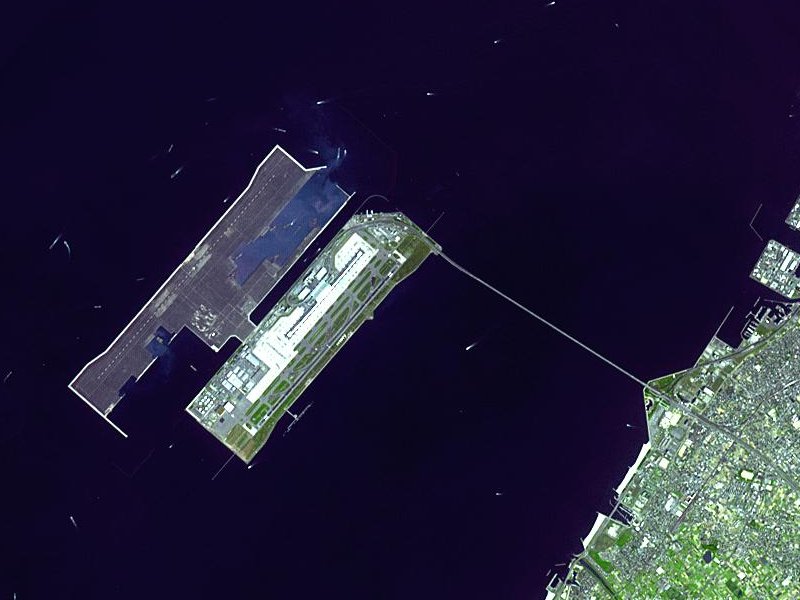
The structures listed above are all amazing in their own regards, however, this discipline of Civil Engineering isn't for me.  Personally, upon graduation, I would like to work in the Transportation Engineering sub-group of CE.  I don't necessarily mean working for the highway department, but rather planning and designing infrastructure such as airports.  As an Air Force ROTC cadet, aviation is very near and dear to my heart. NDSU offers a course in airport planning and design which helps give those students interested in the career field of Transportation Engineering, a taste of reality.

File:Kansai closeup.jpg
Kansai International Airport
One other fascinating opportunity, is the potential collaboration with other professions.  In the advanced materials discipline of Civil Engineering, engineers combine with chemists, physicists, and even biologists in the design and testing of "smart" materials; designed with composite materials and in some case, sensors.  This just goes to show the vast array of careers awaiting civil engineering students upon graduation!

In addition to planning various building projects, design is also very important in the grand scheme of things.  As a Civil Engineer, a person would not only get to experience the tolerance and parameter side of the spectrum, but they would also get to "play architect" on different projects.  Whether people like to admit it or not, Civil Engineering and Architecture go hand in hand.  While one side is responsible for the safe design and close inspection/testing of parameters, the other is in charge of making the structure, whatever it may be, aesthetically pleasing to the public's eye.  So the next time you hear an engineer and architect arguing over who has more importance, just know they are both experts in their respective technical field(s).

The Civil Engineering career field values hard-working and determined individuals looking to make a difference in their society.  This difference may be designing Fargo's next cutting-edge storm sewer system or designing and testing self-cleaning glass placed in New York's next skyscraper.  Regardless, whatever discipline of Civil Engineering a person might find themselves in, it will certainly not disappoint!


Sources:
http://www.burjdubaiskyscraper.com/2010/02/burj0902.jpg
http://upload.wikimedia.org/wikipedia/commons/f/fd/Kansai_closeup.jpg
http://jobspotbeta.ryerson.ca/wp-content/uploads/2011/01/1273683372_civil_engineering_bridge.jpg